What the mark certifies
BBCOR, short for batted ball coefficient of restitution, is a ratio: the speed a ball keeps after striking the bat. The NCAA protocol sets the limit at 0.500, measured at the barrel's liveliest point, and that is the .50 in the mark. All certified bats share one ceiling. The mark does not rank them; it says each is inside the limit.
How a bat earns the mark
Certification rests on laboratory testing of the bat itself. Under the NCAA protocol the work is done at Washington State University's Sports Science Laboratory. A maker submits two samples of each length; one is fired at with an air cannon and measured, and the other is held back as a reference. Composite barrels face a further test that simulates break-in, so a bat that grows livelier with use must still be under the limit after it has been worked.
What to check on the bat
- A BBCOR .50 mark that is permanent: printed or etched on the barrel in a rectangle at least an inch on a side, in a contrasting colour. A sticker or decal is not accepted.
- On bats made after June 1, 2020, the model number appears with the mark, 16 to 24 inches from the knob.
- A grip of cork, tape or manufactured composition between 10 and 18 inches from the knob, and the original knob.
- The model on the approved list, and not on the decertified list.
Certification does not last forever
A certification is issued for a fixed term of four or six years, counted from the test and set by the result. The laboratory also publishes the models it later decertifies, and a decertified bat is not legal however it feels. Its approved list is the record, and an umpire can look a model up as easily as you can.
One-piece or two-piece, alloy or composite
Certification applies to all of them. They differ in how they feel and how they are prepared for use.
- One-piece
- Knob to end cap in a single piece. Stiff and direct; contact is felt in the hands. An alloy one is ready at full performance on the first swing.
- Two-piece
- Barrel and handle made separately and joined by a connection piece. The handle gives a little, which generally softens contact.
- Hybrid
- Alloy barrel, composite handle. Pairs the two.
- Composite barrel
- Composite material in the barrel. May need a break-in period, and makers often say to keep it out of cold weather.
None of these is better in the abstract; each suits a different hitter. Direct feedback and a bat ready on day one point to one-piece alloy, and a more cushioned feel points to two-piece or composite. The BBCOR Bat Guide takes construction, swing weight and feel further.
One scheduled change
USA Baseball has published its own USA BBCOR program. Bats with its mark can be used in NCAA play from the 2028 season under the same limits on barrel, drop and length, and today's BBCOR .50 mark stays permitted. A bat bought today does not become illegal.
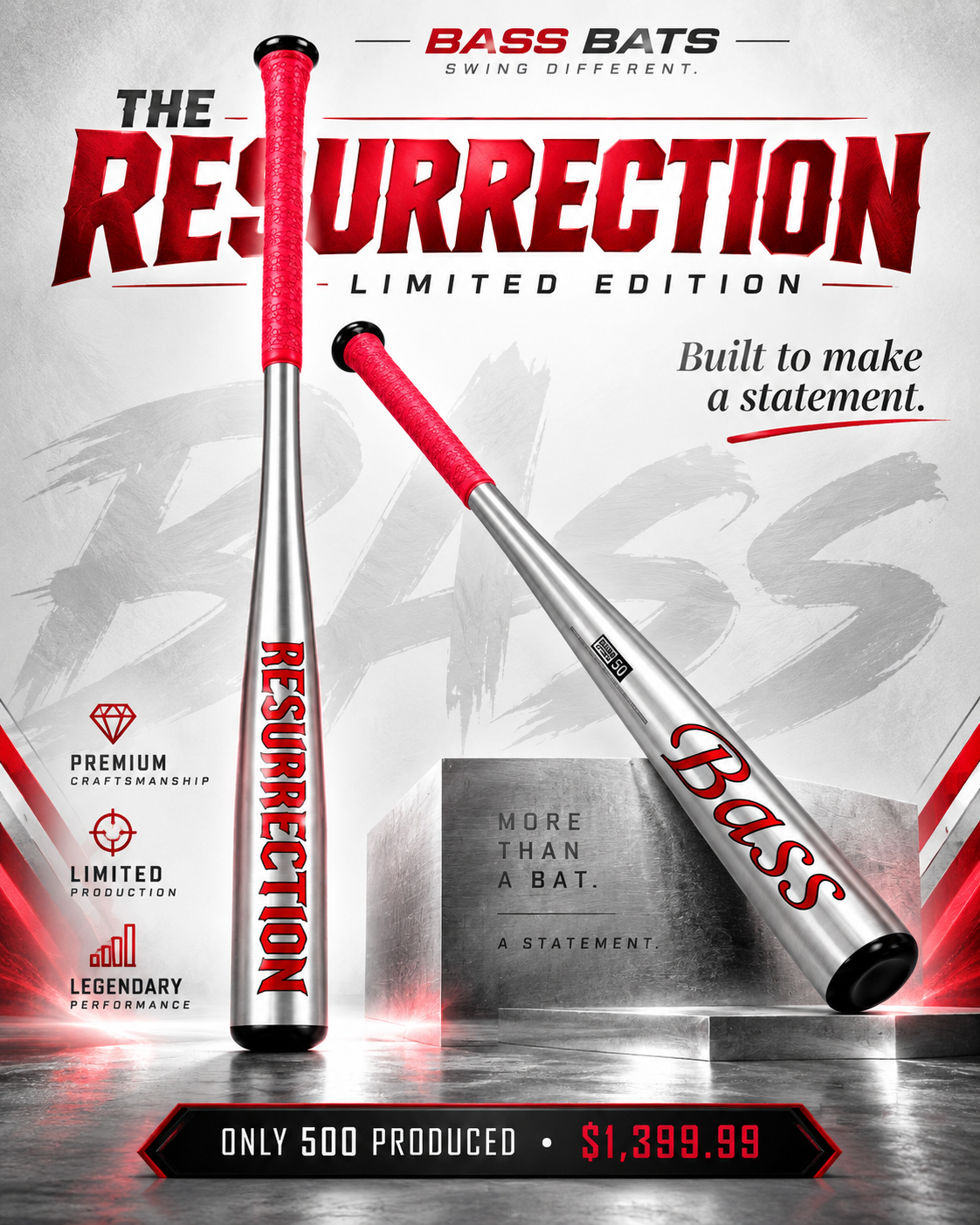
RESURRECTION: certified, one-piece, limited
RESURRECTION is a one-piece alloy bat, BBCOR .50 and certified for high school and collegiate play. Its barrel is 2 5/8 inches, its drop is -3 and it needs no break-in. It is made in a run of 500 and will not be made again. Whatever the bat, confirm the model on the approved list before the season.
Open the page to choose your size and add it to your cart.
Sources
- 01NCAA Standard for Testing Baseball Bat Performance (BBCOR Protocol), updated July 18, 2024
- 02Washington State University Sports Science Laboratory: approved bats and decertifications
- 03Washington State University Sports Science Laboratory: bat performance measures (BBCOR defined)
- 04NFHS Baseball Rules Book, Rule 1, Section 3 (bats), as published by Baseball Rules Academy
- 05USA Baseball: About USA BBCOR
Questions
- What does BBCOR .50 certify?
- That the barrel's peak BBCOR, the ratio of the ball's speed after impact to its speed before, is 0.500 or less, and that the bat meets the limits on barrel, length and drop.
- How do I check a bat is certified?
- Look on the barrel for the permanent BBCOR .50 mark, then look the model up on the approved list the Washington State University Sports Science Laboratory publishes; decertified models are listed there too.
- Can a sticker certify a bat?
- No. The NFHS rule calls for a silkscreen or other permanent mark and does not accept a label, sticker or decal.
- Does a BBCOR bat need breaking in?
- Alloy bats do not. Composite barrels often do, which is why they get an extra accelerated break-in test before certification. RESURRECTION is one-piece alloy and needs no break-in.
- Is a one-piece or a two-piece BBCOR bat better?
- Neither, in the abstract. One-piece gives direct feedback and two-piece generally softens contact. Both meet the same certification.
- Does a BBCOR bat have to be -3?
- Yes: nothing lighter is allowed, and the certification process verifies the drop. See What does -3 mean on a BBCOR bat?.